VOIP WHOLESALE · SIP INTERCONNECTION · CALLCENTER TRAFFIC
Asterisk SIP trunk. Clear parameters, proper connectivity.
An Asterisk SIP trunk connects your telephony platform to the agreed destination networks. SpeedNetwork provides SIP connectivity for Asterisk, FreePBX and call centre systems built on them. The focus is on clear connection parameters and a verifiable transition into operation.
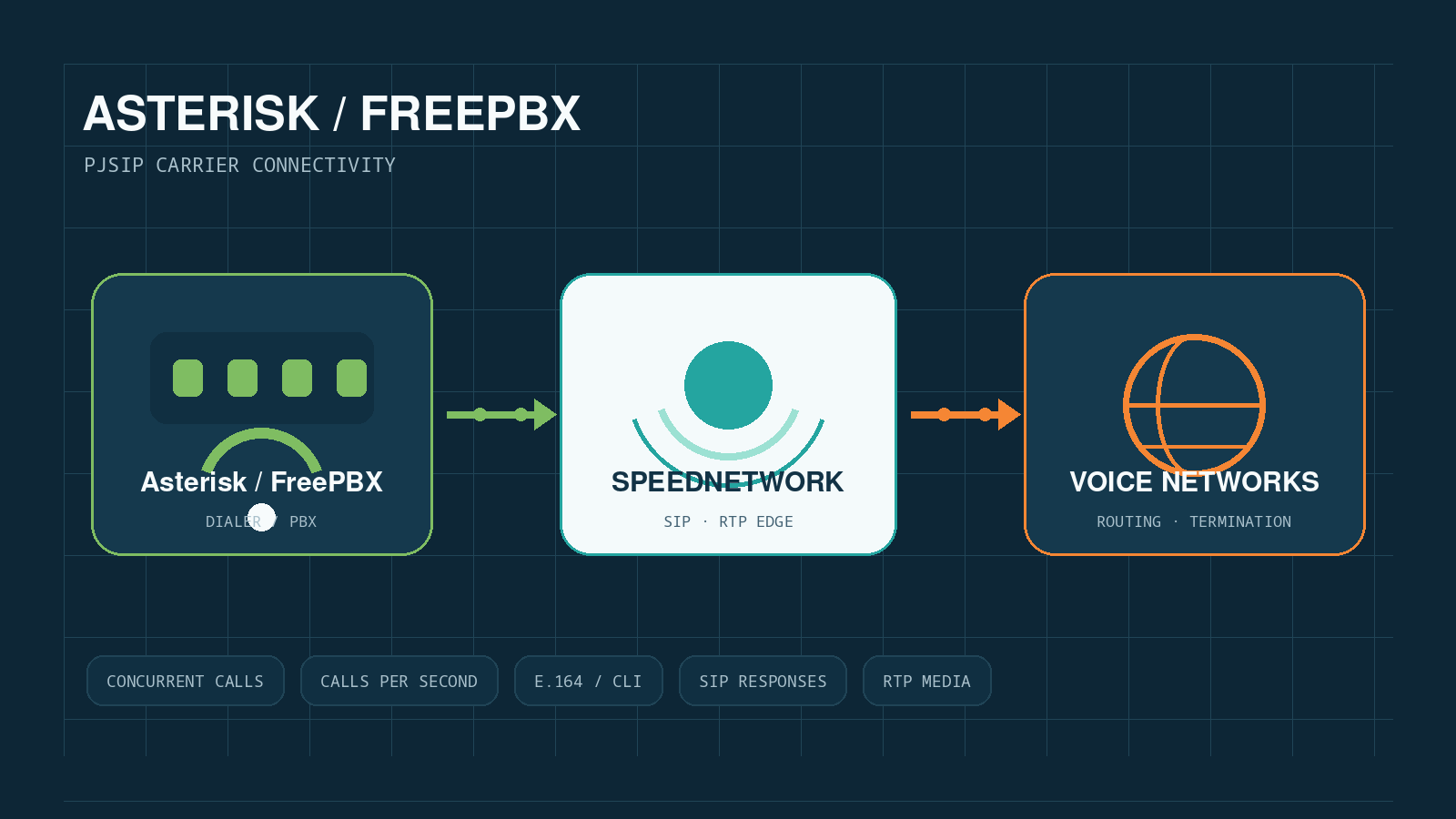
Asterisk
Defined in the service profile
FreePBX
Defined in the service profile
PJSIP
Defined in the service profile
SIP carrier
Defined in the service profile
01 · TECHNOLOGY AND OPERATIONS
Understanding an Asterisk SIP trunk with PJSIP
PJSIP endpoints, addresses of record, auth and identify sections serve different purposes. They describe media options, reachable contacts, authentication and identification of incoming SIP messages. The objects your installation needs depend on the connection model and Asterisk version.
Outbound registration is not the same as IP-based authorisation. Authentication and reachable peers are therefore agreed first. We do not publish universal credentials or a supposedly universal pjsip.conf. The actual configuration must follow the approved connection parameters.
02 · TECHNOLOGY AND OPERATIONS
FreePBX SIP trunk and outbound routes
FreePBX manages Asterisk configuration through its interface. A SIP trunk alone does not decide which destination uses it. Trunk selection, outbound routes, dial patterns and any dial prefixes must work together. Overwriting generated files directly is not a sensible default approach.
Testing follows the full call path from the extension to the telephone network. It includes international number formats, permissions and error reporting. For call centres using automated dialling, the application’s load controls also form part of the review.
03 · TECHNOLOGY AND OPERATIONS
SIP signalling is not the RTP media path
A successful SIP dialogue does not guarantee two-way audio. Firewalls, NAT, advertised SDP addresses and permitted RTP port ranges can affect the audio path. Testing must distinguish signalling from media rather than treating every audio problem as a carrier issue.
Codecs and DTMF methods are checked against your environment. Queues, transfers, early media and longer calls can require their own test cases. The availability and need for particular transport or encryption methods are agreed for the specific connection.
04 · TECHNOLOGY AND OPERATIONS
Keep caller ID and routing traceable
The destination number, caller ID and a possible technical username are different values. Incorrect prefix handling or an unexpected From domain can cause failures. Acceptance therefore considers the actual SIP INVITE, not just values shown in a configuration screen.
Authorised caller IDs and P-Asserted-Identity handling are agreed explicitly. Callbacks and inbound delivery require their own planning if included in scope. One successful outbound test does not establish that incoming calls are delivered correctly.
05 · TECHNOLOGY AND OPERATIONS
Information that helps your Asterisk connection
Provide Asterisk or FreePBX version, public reachability, existing NAT or SBC components and the intended use. Add destinations, expected minutes, concurrent calls and planned CPS for diallers. Distinguish a new connection from a migration or troubleshooting request.
A bounded test checks setup, audio, DTMF and hangup against agreed destinations. Results and responsibilities are documented before production load is approved. The Asterisk SIP trunk is therefore tested as part of the full telephony workflow, not merely configured.
TRAFFIC PROFILE
Asterisk SIP trunk: traffic profile and operational limits.
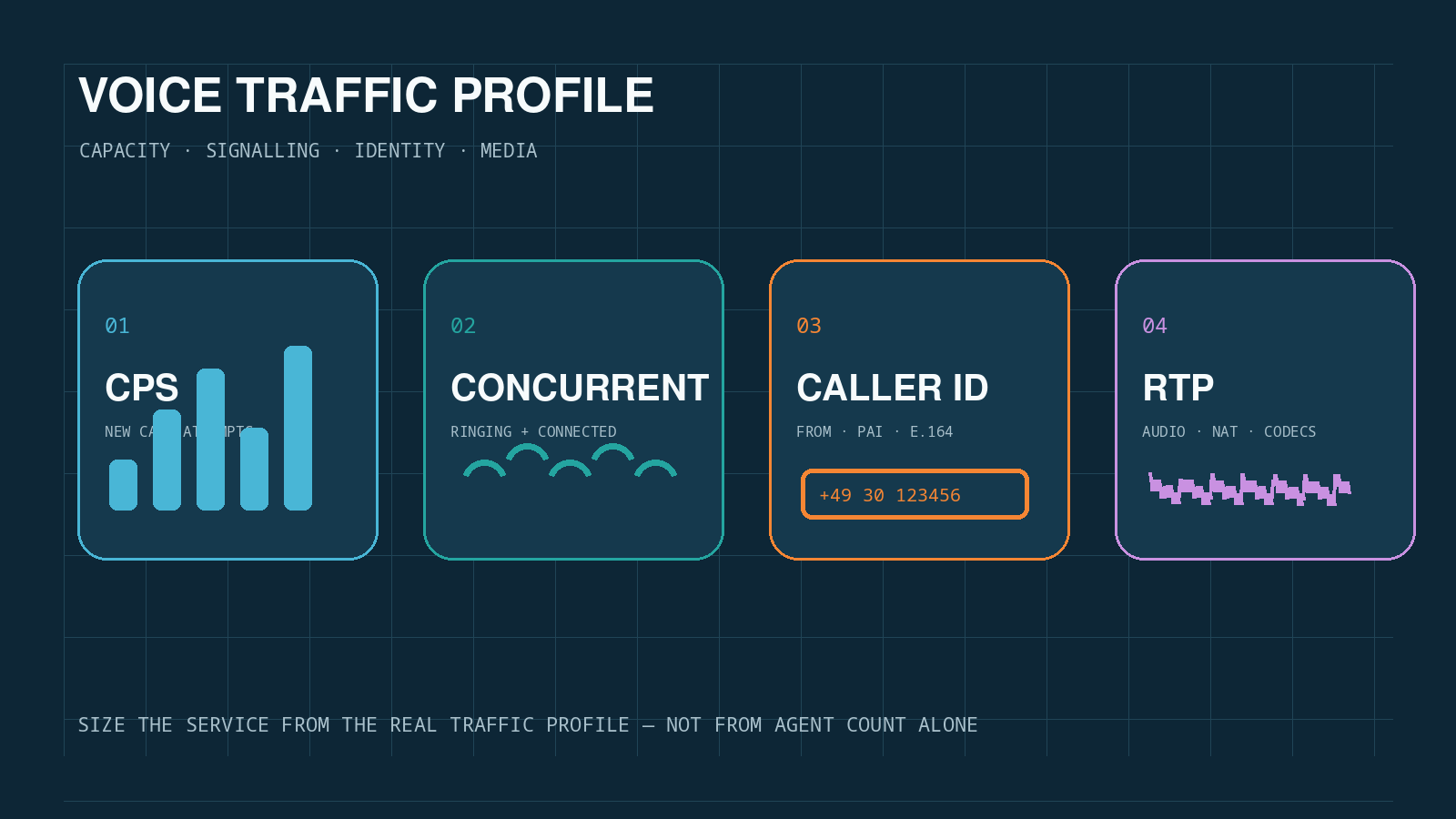
A Asterisk SIP trunk is not defined by one channel value. Destination mix, calls per second, concurrent ringing and connected calls, call duration and daily load interact. Before the pilot, we therefore document the permitted load, how the dialler limits it and which changes require a fresh review.
To keep the Asterisk SIP trunk traceable in production, test windows, number format, routing and technical contacts are recorded. A controlled ramp-up gives better evidence than starting immediately at maximum load. When results differ, specific Call-IDs and timestamps are more useful than broad assumptions about quality.
QUALITY IN CONTEXT
Read the metrics correctly and test specific calls.
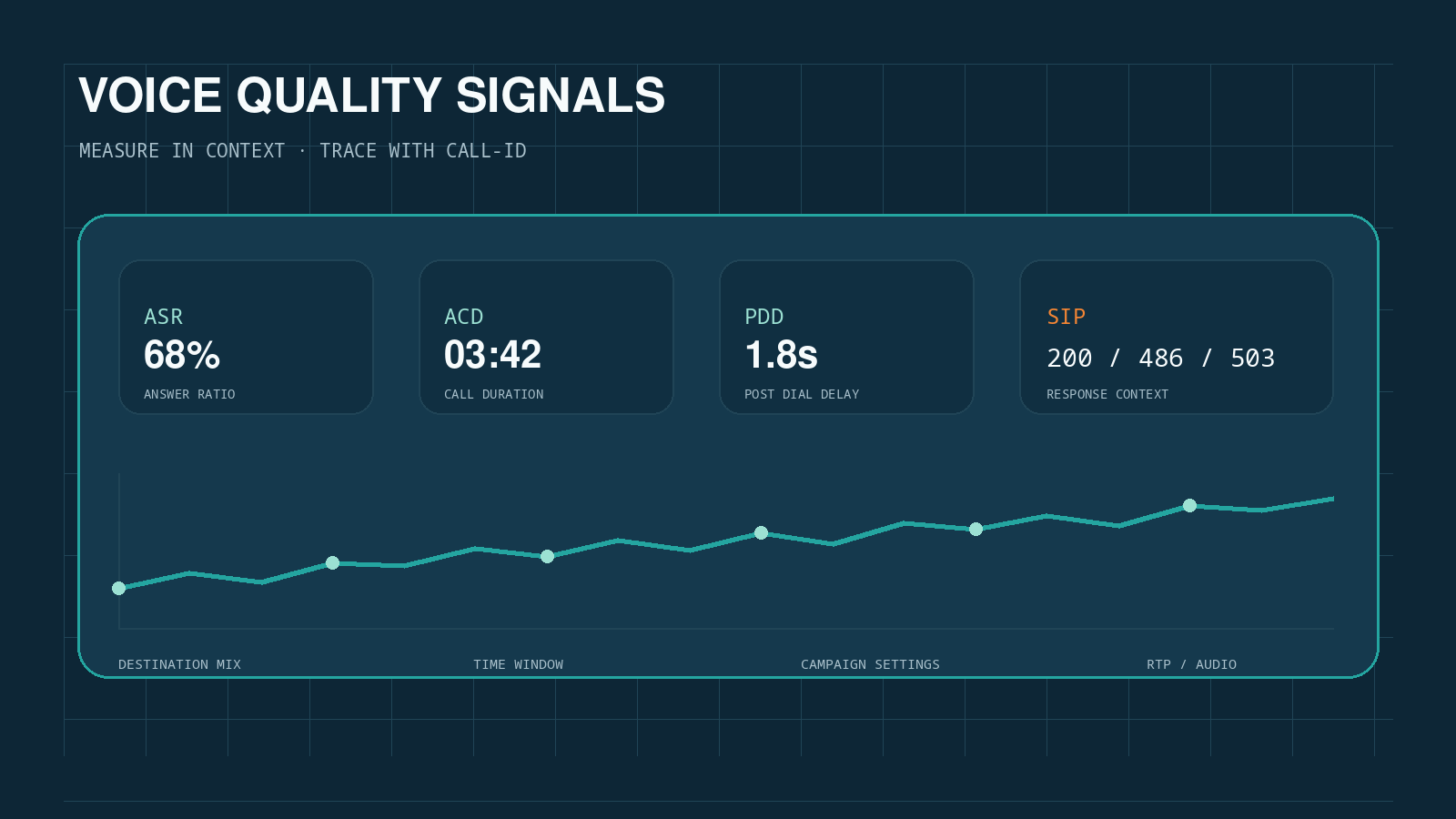
Quality for a Asterisk SIP trunk is not inferred from one percentage. ASR, ACD and PDD depend on destination, campaign, contactability and time of day, among other factors. The figures are considered together with SIP responses and the actual media path.
For a specific fault, we check call setup, early media, two-way audio, DTMF and hangup. This distinguishes platform, network, signalling, RTP and destination issues. The approach makes the Asterisk SIP trunk technically testable and keeps responsibilities clear.
INFORMATION FOR A QUOTE
So sizing is based on facts, not guesswork.
A reliable Asterisk SIP trunk offer starts with aggregate technical and commercial information. Please do not send passwords or personal lead lists.
FAQ
Common questions about Asterisk SIP trunk before technical review.
Does FreePBX use a different carrier connection from Asterisk?
FreePBX is built on Asterisk. Interface and version affect configuration; SIP connection parameters must match in either case.
Can an existing PBX be tested alongside its current carrier?
A bounded test route can be planned together. Routing, caller IDs and fallback to the existing connection must not change unintentionally.
Technical reference: Further primary source.
THE NEXT STEP
Plan Asterisk connectivity
Provide Asterisk or FreePBX version, endpoints, NAT/SBC, destinations and load profile. We will define the tests.