VOIP WHOLESALE · SIP INTERCONNECTION · CALLCENTER TRAFFIC
A SIP trunk for call centres and diallers.
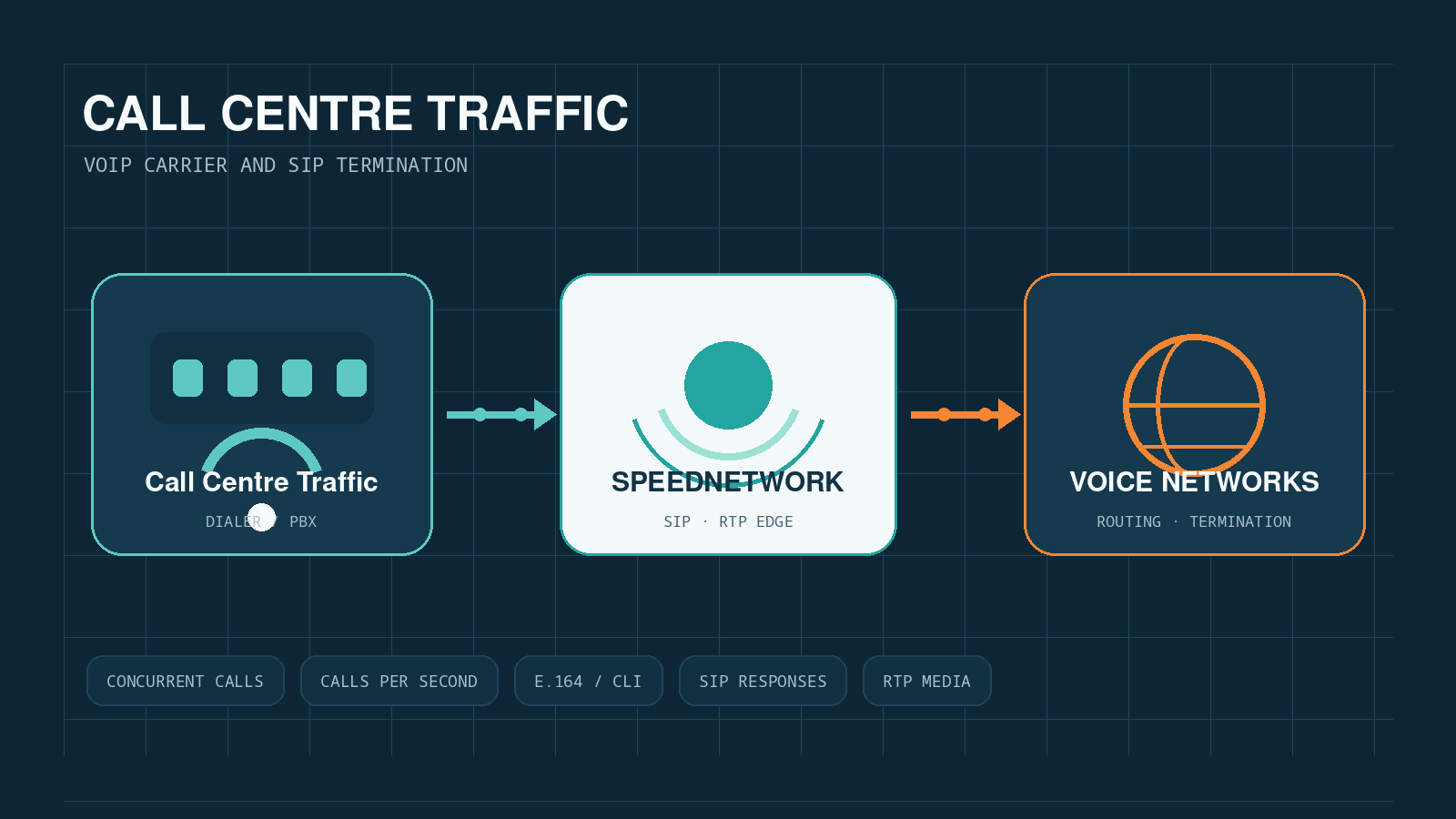
A SIP trunk for call centres needs to fit the traffic profile of the dialling platform. SpeedNetwork aligns authentication, SIP peers, codecs, RTP, number format, concurrent calls and CPS with your environment and supports the controlled transition from test to production.
SIP
Defined in the service profile
RTP
Defined in the service profile
PJSIP
Defined in the service profile
E.164
Defined in the service profile
01 · TECHNOLOGY AND OPERATIONS
IP authorisation, registration or SBC connectivity
A SIP trunk can use fixed IP authorisation, registration or upstream SBC components depending on the service model. These variants are not interchangeable. Reachability, direction of SIP dialogues, authentication and allowed peers are agreed before configuration.
For deployments with several dialler or Asterisk servers, we also establish whether a shared SBC, separate endpoints or internal routing is used. Credentials are not published in public examples or exchanged unprotected through general forms.
02 · TECHNOLOGY AND OPERATIONS
PJSIP, chan_sip and platform versions
Asterisk installations can use different SIP stacks and configuration models. With PJSIP, endpoint, AOR, auth, identify and transport serve different purposes. A carrier example for another version should not be copied without review.
FreePBX generates parts of the Asterisk configuration from its interface. Directly overwriting generated files is not a reliable standard approach. Trunk, outbound route, dial pattern and any prefixes must work together and be checked in the actual SIP INVITE after changes.
03 · TECHNOLOGY AND OPERATIONS
Codecs, DTMF, NAT and RTP
SIP signals the call; RTP carries the audio in many environments. A call can therefore ring or appear connected while audio works in one direction only. NAT, firewall, SDP addresses and port permissions are checked separately from SIP authentication.
Permitted codecs and the DTMF method are aligned with the service parameters. Transfers, queues, early media and longer calls can require their own tests. Particular transport or encryption methods are only promised where confirmed for the specific service.
04 · TECHNOLOGY AND OPERATIONS
CPS, channels and campaign pacing
A SIP trunk used for automated dialling is not described by agent count alone. Campaigns can call many destinations while other connections are ringing or already connected. Attempt rate and concurrency therefore need separate treatment.
Agreed CPS and channel values are matched to dialler settings. The platform remains responsible for keeping within approved load. A migration should use a pilot with a limited destination mix and controlled ramp-up.
05 · TECHNOLOGY AND OPERATIONS
E.164, From and P-Asserted-Identity
Destinations should be passed in the agreed format. Duplicate prefixes, unexpected plus-sign handling or inconsistent country codes often cause confusing faults. One successful number does not replace testing of the intended destination profile.
Caller ID is handled according to authorisation and connection parameters. From, P-Asserted-Identity and an authentication username are different values. Callback and inbound delivery are planned separately where part of the project.
06 · TECHNOLOGY AND OPERATIONS
Acceptance from first INVITE to hangup
Testing covers call setup, SIP responses, two-way audio, DTMF and clean hangup. Depending on the use case, busy, no answer, transfer, early media and callback are also tested. Results are documented with timestamp and Call-ID.
After a successful pilot, production cutover, fallback and contacts are agreed. The SIP trunk is therefore accepted as part of the complete telephony process rather than merely configured.
TRAFFIC PROFILE
SIP trunk for call centres: traffic profile and operational limits.
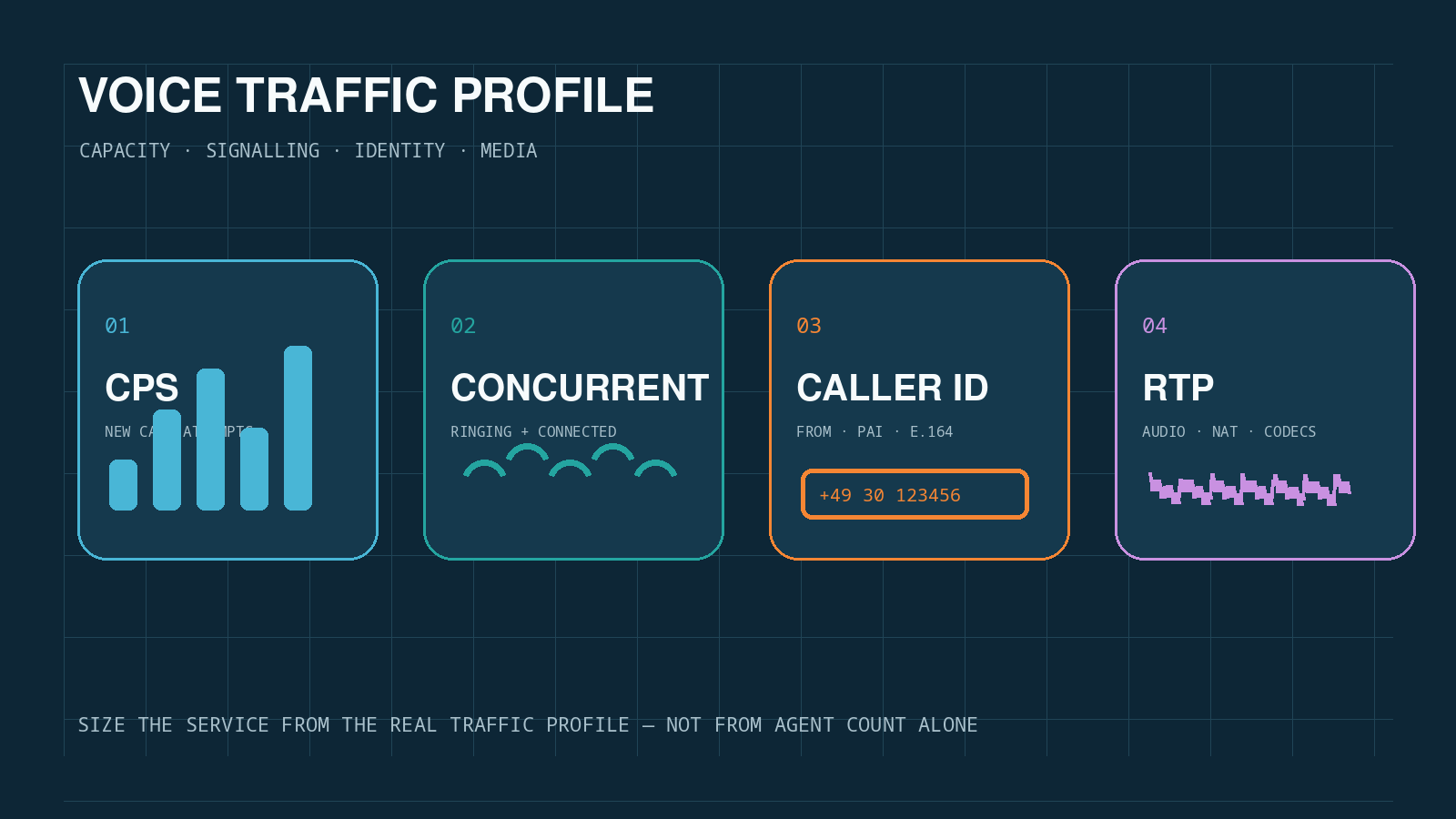
A SIP trunk for call centres is not defined by one channel value. Destination mix, calls per second, concurrent ringing and connected calls, call duration and daily load interact. Before the pilot, we therefore document the permitted load, how the dialler limits it and which changes require a fresh review.
To keep the SIP trunk for call centres traceable in production, test windows, number format, routing and technical contacts are recorded. A controlled ramp-up gives better evidence than starting immediately at maximum load. When results differ, specific Call-IDs and timestamps are more useful than broad assumptions about quality.
QUALITY IN CONTEXT
Read the metrics correctly and test specific calls.
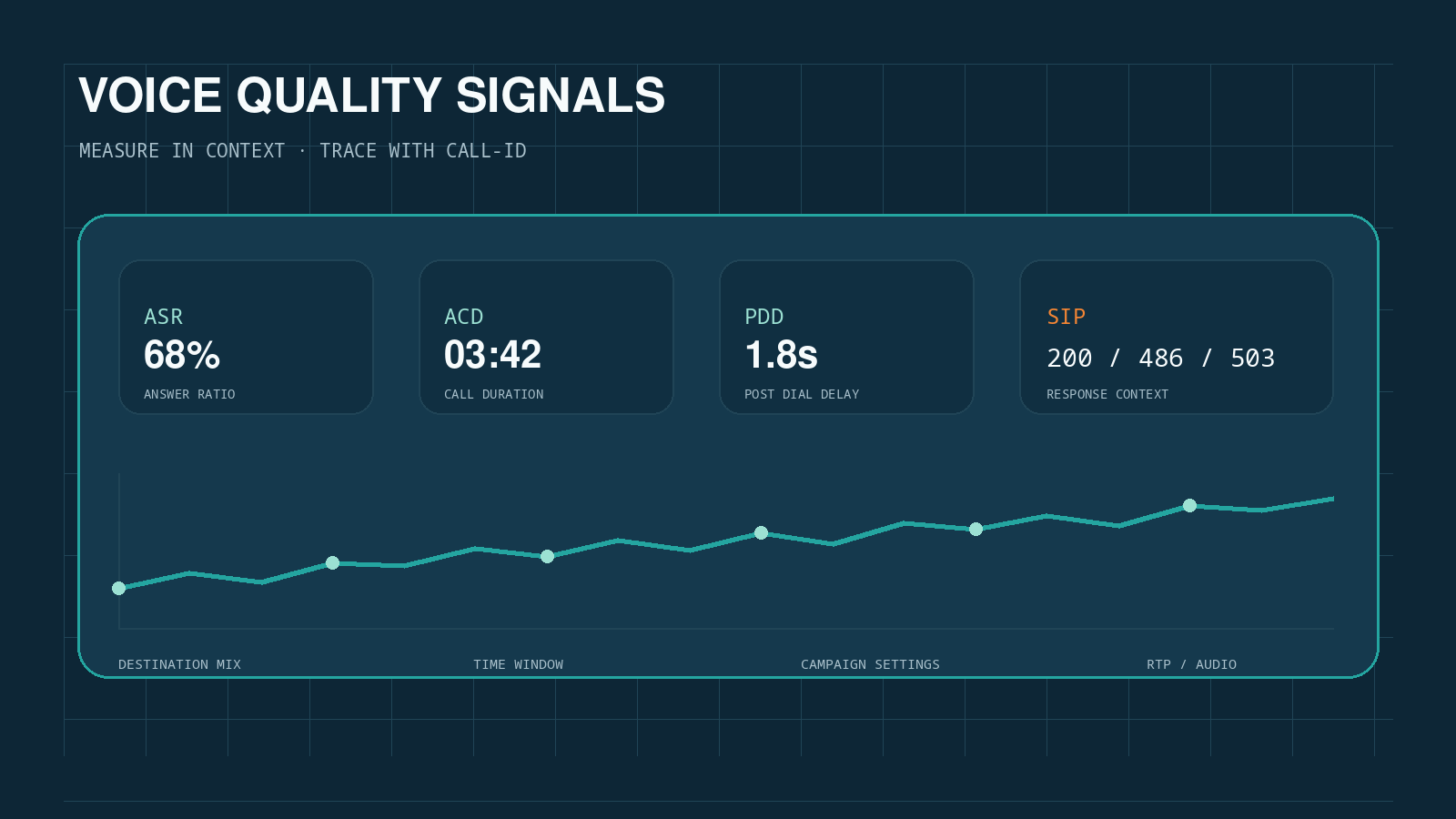
Quality for a SIP trunk for call centres is not inferred from one percentage. ASR, ACD and PDD depend on destination, campaign, contactability and time of day, among other factors. The figures are considered together with SIP responses and the actual media path.
For a specific fault, we check call setup, early media, two-way audio, DTMF and hangup. This distinguishes platform, network, signalling, RTP and destination issues. The approach makes the SIP trunk for call centres technically testable and keeps responsibilities clear.
INFORMATION FOR A QUOTE
So sizing is based on facts, not guesswork.
A reliable SIP trunk for call centres offer starts with aggregate technical and commercial information. Please do not send passwords or personal lead lists.
FAQ
Common questions about SIP trunk for call centres before technical review.
Does the trunk work with VICIdial or OSDial?
Both platforms use Asterisk and SIP components. The specific version, carrier configuration and network environment are reviewed before testing.
Is IP authentication always better than registration?
No. The right model depends on reachability, security design, address stability and architecture. It is agreed for the service.
What data is needed for technical testing?
Versions, public endpoints, NAT/SBC design, destination format, codecs, CPS, concurrent calls and a clear test window are a good starting point.
Technical reference: Further primary source.
THE NEXT STEP
Plan your SIP trunk
Provide platform, version, endpoints, destinations, CPS and concurrent calls. We will structure the test path.