VOIP WHOLESALE · SIP INTERCONNECTION · CALLCENTER TRAFFIC
OSDial SIP trunk for professional calling teams.
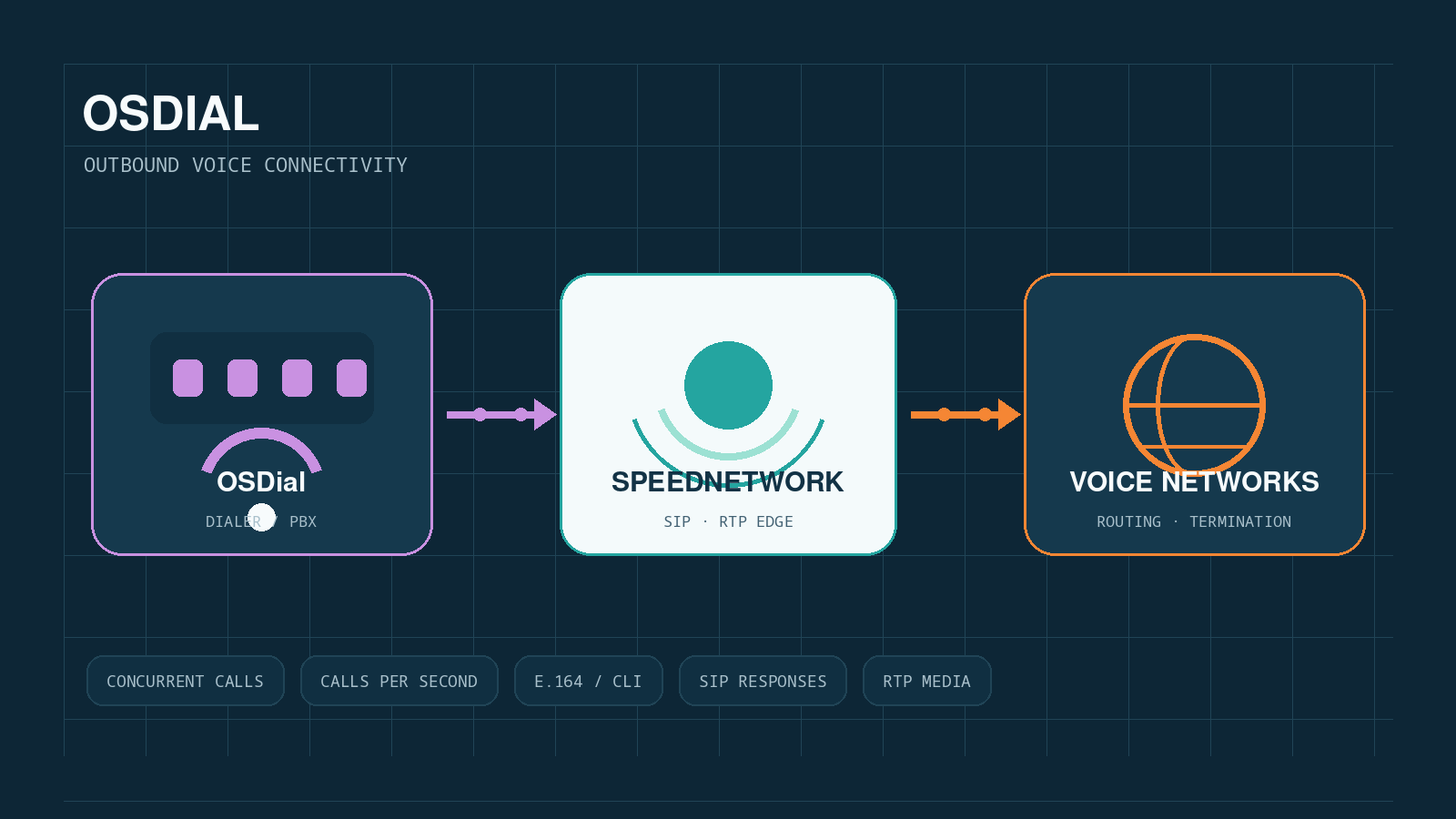
An OSDial SIP trunk connects your existing dialler to the right VoIP service. SpeedNetwork aligns connectivity with your traffic profile: campaigns, parallel attempts, destinations and traceable presentation of authorised caller IDs are central to the review.
OSDial
Defined in the service profile
Outbound
Defined in the service profile
CPS
Defined in the service profile
Caller ID
Defined in the service profile
01 · TECHNOLOGY AND OPERATIONS
OSDial SIP trunk without a forced platform change
You are looking for telephony for an existing OSDial environment, not a new agent interface. Agents, lists, campaigns and dispositions remain in your system. Carrier connectivity is a separate technical layer and can be evaluated independently of changing call centre software.
If you also need a new platform, Dial24 can be considered separately. It is not a prerequisite for a SIP offer. First establish the OSDial and Asterisk versions, number of servers involved and where call traffic is currently handed over.
02 · TECHNOLOGY AND OPERATIONS
Describe campaign load, not just agent count
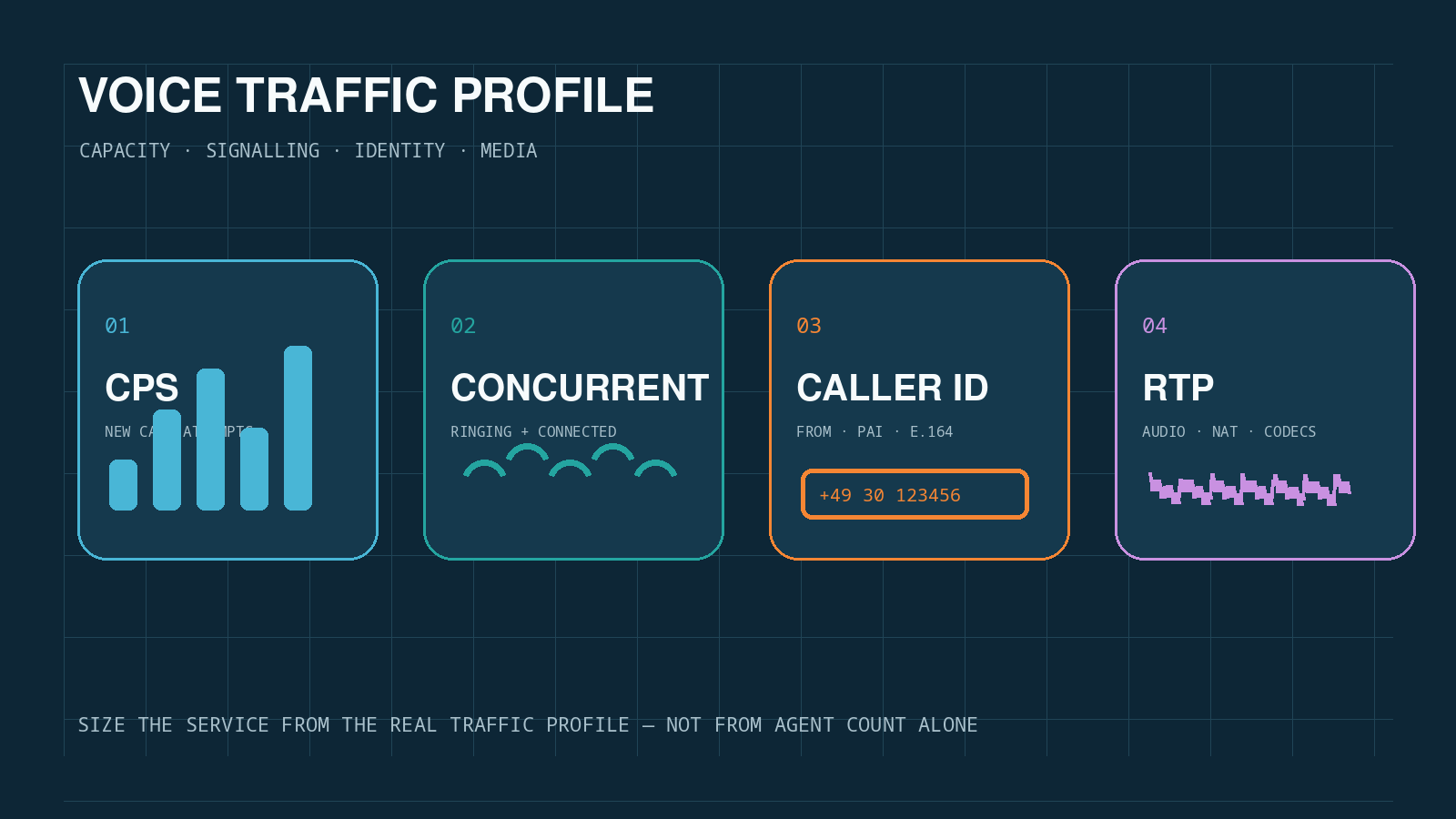
Outbound campaigns can generate considerably more attempts than answered calls. Sizing therefore considers peak concurrent connections, calls per second, daily load patterns and destination mix. Call duration and contactability also change the load on different parts of the connection.
An existing daily report can be reduced to aggregate figures for an initial discussion. Personal lead lists are not needed. The traffic profile informs technical and commercial requirements; specific channel and CPS limits are established in the approved offer.
03 · TECHNOLOGY AND OPERATIONS
Agree dialplan, prefixes and caller ID
The path from campaign to carrier must be unambiguous. This includes the dialplan, any campaign-specific prefixes and the expected destination format. Accidentally duplicated prefixes or different formats in testing and production make fault analysis harder.
The intended caller ID is checked against usage rights and connection parameters. From and P-Asserted-Identity should not simply be treated as interchangeable fields. Callbacks to the presented number need separate planning if the campaign is intended to receive incoming responses.
04 · TECHNOLOGY AND OPERATIONS
Test call setup and audio in a pilot
A useful pilot covers answered calls, busy destinations, unanswered attempts and clean termination from either end. Audio testing considers RTP, NAT and agreed codecs. An issue is narrowed down to a specific example with timestamp, time zone and SIP Call-ID.
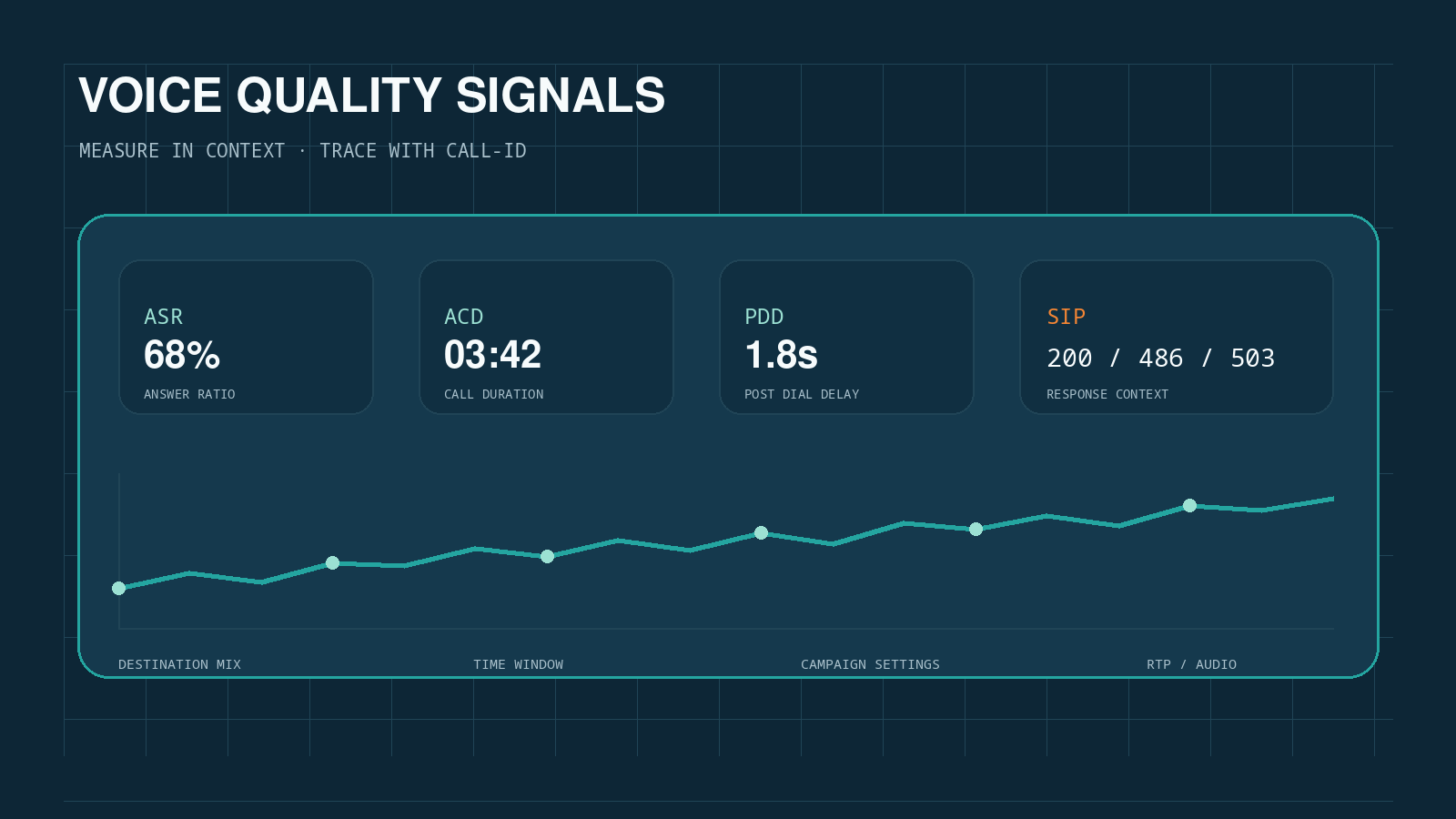
Metrics such as ASR and ACD are evaluated by campaign and destination. Poor contactability of a lead list cannot be explained by a carrier metric alone. Useful comparisons require documented test windows, destination mix and campaign settings.
05 · TECHNOLOGY AND OPERATIONS
A clear path into operation
Start with a short description of your OSDial environment and the desired change. Review is followed by an offer, connection parameters and a bounded test scenario. The production transition accounts for caller IDs, callbacks and existing workflows.
Responsibilities between dialler operations and carrier connectivity are identified for later technical enquiries. An OSDial SIP trunk is therefore more than a username and password: it is an agreed handover point with a defined traffic profile and testable assumptions.
TRAFFIC PROFILE
OSDial SIP trunk: traffic profile and operational limits.
A OSDial SIP trunk is not defined by one channel value. Destination mix, calls per second, concurrent ringing and connected calls, call duration and daily load interact. Before the pilot, we therefore document the permitted load, how the dialler limits it and which changes require a fresh review.
To keep the OSDial SIP trunk traceable in production, test windows, number format, routing and technical contacts are recorded. A controlled ramp-up gives better evidence than starting immediately at maximum load. When results differ, specific Call-IDs and timestamps are more useful than broad assumptions about quality.
QUALITY IN CONTEXT
Read the metrics correctly and test specific calls.
Quality for a OSDial SIP trunk is not inferred from one percentage. ASR, ACD and PDD depend on destination, campaign, contactability and time of day, among other factors. The figures are considered together with SIP responses and the actual media path.
For a specific fault, we check call setup, early media, two-way audio, DTMF and hangup. This distinguishes platform, network, signalling, RTP and destination issues. The approach makes the OSDial SIP trunk technically testable and keeps responsibilities clear.
INFORMATION FOR A QUOTE
So sizing is based on facts, not guesswork.
A reliable OSDial SIP trunk offer starts with aggregate technical and commercial information. Please do not send passwords or personal lead lists.
FAQ
Common questions about OSDial SIP trunk before technical review.
Do I have to move to Dial24?
No. Your enquiry can concern only the SIP connection for OSDial. A software migration and a telephony service are separate decisions.
What information is needed for a quote?
Versions, destinations, traffic volume, concurrent calls and attempt rate are a useful starting point. Please do not send passwords or lead lists.
Technical reference: Further primary source.
THE NEXT STEP
Review your OSDial trunk
Provide version, campaign type, destinations, minutes, CPS and concurrent calls. We will respond with the next technical step.