VOIP WHOLESALE · SIP INTERCONNECTION · CALLCENTER TRAFFIC
A predictive dialler SIP trunk for controlled pacing.
A predictive dialler SIP trunk needs to handle rapid attempts and concurrent connections as separate dimensions. SpeedNetwork aligns calls per second, concurrent calls, destinations, caller ID and pilot operation with your campaign pacing.
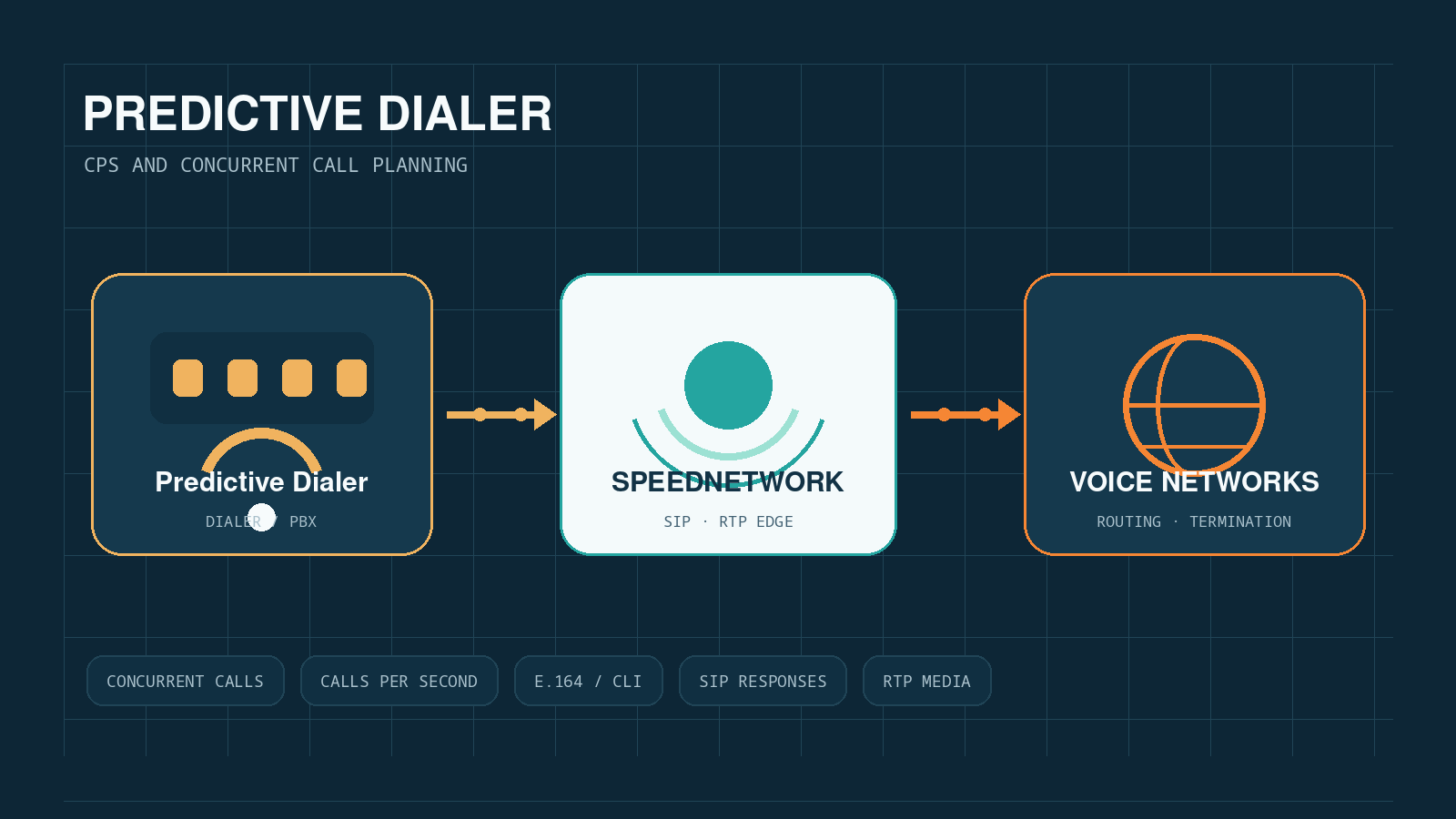
CPS
Defined in the service profile
Concurrent calls
Defined in the service profile
Early media
Defined in the service profile
Ramp-up
Defined in the service profile
01 · TECHNOLOGY AND OPERATIONS
Dial ratio is not carrier capacity
Dial ratio describes how aggressively a platform attempts contacts relative to expected available agents. It does not directly define carrier capacity. Contactability, call duration, ringing time and campaign logic change the actual number of concurrent connections.
Sizing therefore uses real or realistically estimated peak values. A bounded traffic pilot provides better evidence than a generic assumption based on seats and dial ratio.
02 · TECHNOLOGY AND OPERATIONS
Set CPS for new call attempts
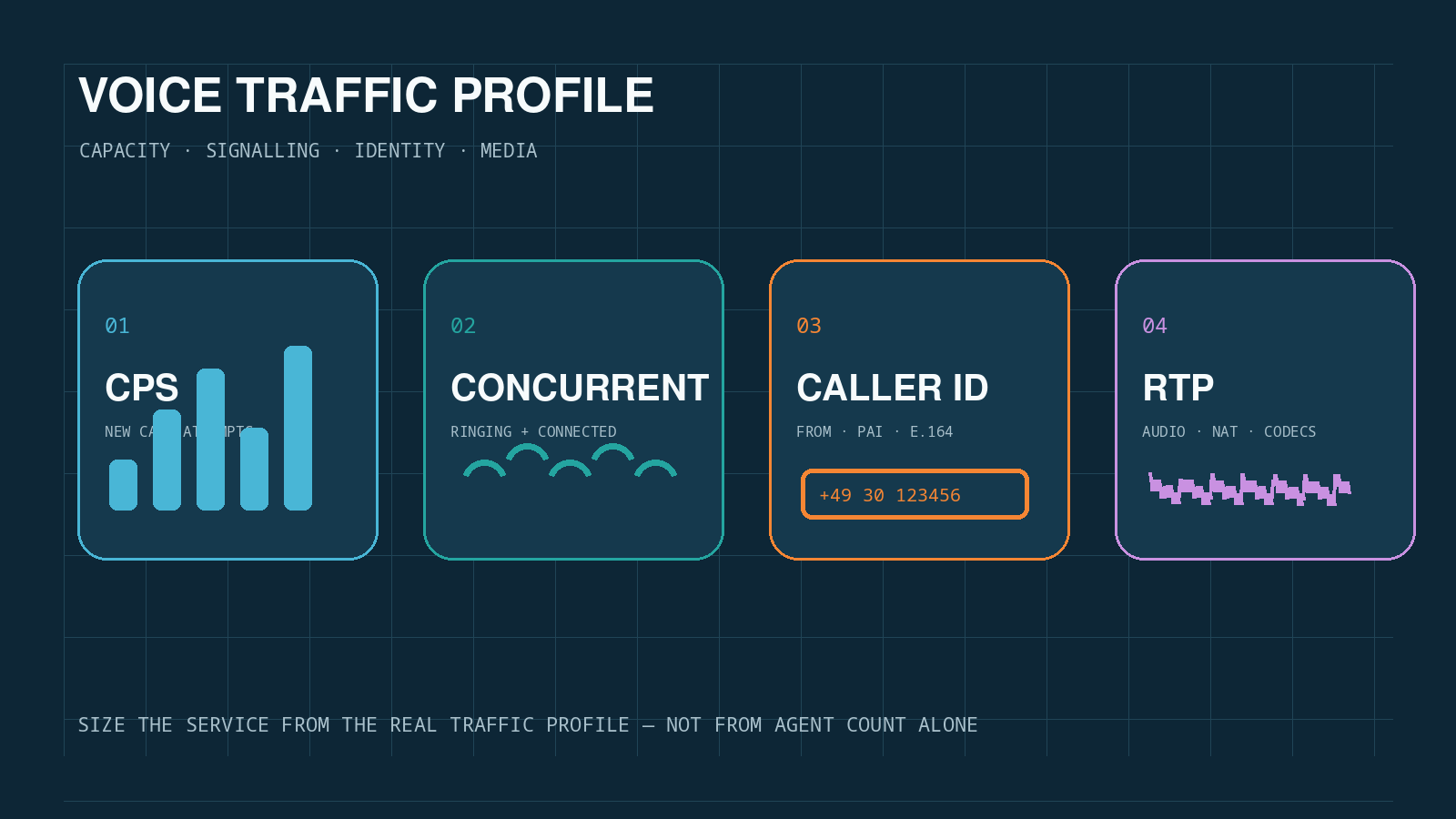
Calls per second measure the rate of new call attempts. High CPS loads signalling, dialler, SBC and carrier endpoints even where many destinations are busy or unreachable. The value is therefore agreed explicitly and limited in campaign pacing.
Short bursts can matter as much as the hourly average. With multiple campaigns or servers, combined peak load must be considered rather than only the limit of one campaign.
03 · TECHNOLOGY AND OPERATIONS
Concurrent calls include ringing attempts
Concurrency includes more than conversations connected to agents. Ringing, setting-up and early-media calls can also consume resources. Long ring times and many unanswered destinations therefore increase required concurrency.
The platform should control pacing, timeout and cancellation so the approved profile is respected. The carrier does not replace sound campaign configuration.
04 · TECHNOLOGY AND OPERATIONS
Interpret SIP responses and early media correctly
Predictive diallers react to technical and network results. Busy, unreachable, rejected and no answer should remain distinguishable. Early media can introduce additional audio states before a call is finally connected.
Acceptance testing covers typical response codes and real destination networks. One successful test call does not show how the platform handles failures and high attempt rates.
05 · TECHNOLOGY AND OPERATIONS
Plan caller ID and callbacks for campaigns
Campaigns can use different authorised caller IDs. Selection, format, From and P-Asserted-Identity are agreed. Arbitrary or unverified caller IDs are not part of the service.
If a callback should reach the correct campaign, the displayed number needs a defined inbound path. This is tested separately and cannot be inferred from a successful outbound call.
06 · TECHNOLOGY AND OPERATIONS
Pilot, ramp-up and ongoing observation
The service starts with bounded destinations and a defined load window. Call setup, audio, outcome distribution and technical metrics are reviewed together. Pacing can then be increased in a controlled manner toward the agreed profile.
If campaign type, destination countries or peak load changes materially, the profile should be reviewed again. This keeps the predictive dialler SIP trunk a controlled part of operations rather than an unclear bottleneck.
TRAFFIC PROFILE
Predictive dialler SIP trunk: traffic profile and operational limits.
A Predictive dialler SIP trunk is not defined by one channel value. Destination mix, calls per second, concurrent ringing and connected calls, call duration and daily load interact. Before the pilot, we therefore document the permitted load, how the dialler limits it and which changes require a fresh review.
To keep the Predictive dialler SIP trunk traceable in production, test windows, number format, routing and technical contacts are recorded. A controlled ramp-up gives better evidence than starting immediately at maximum load. When results differ, specific Call-IDs and timestamps are more useful than broad assumptions about quality.
QUALITY IN CONTEXT
Read the metrics correctly and test specific calls.
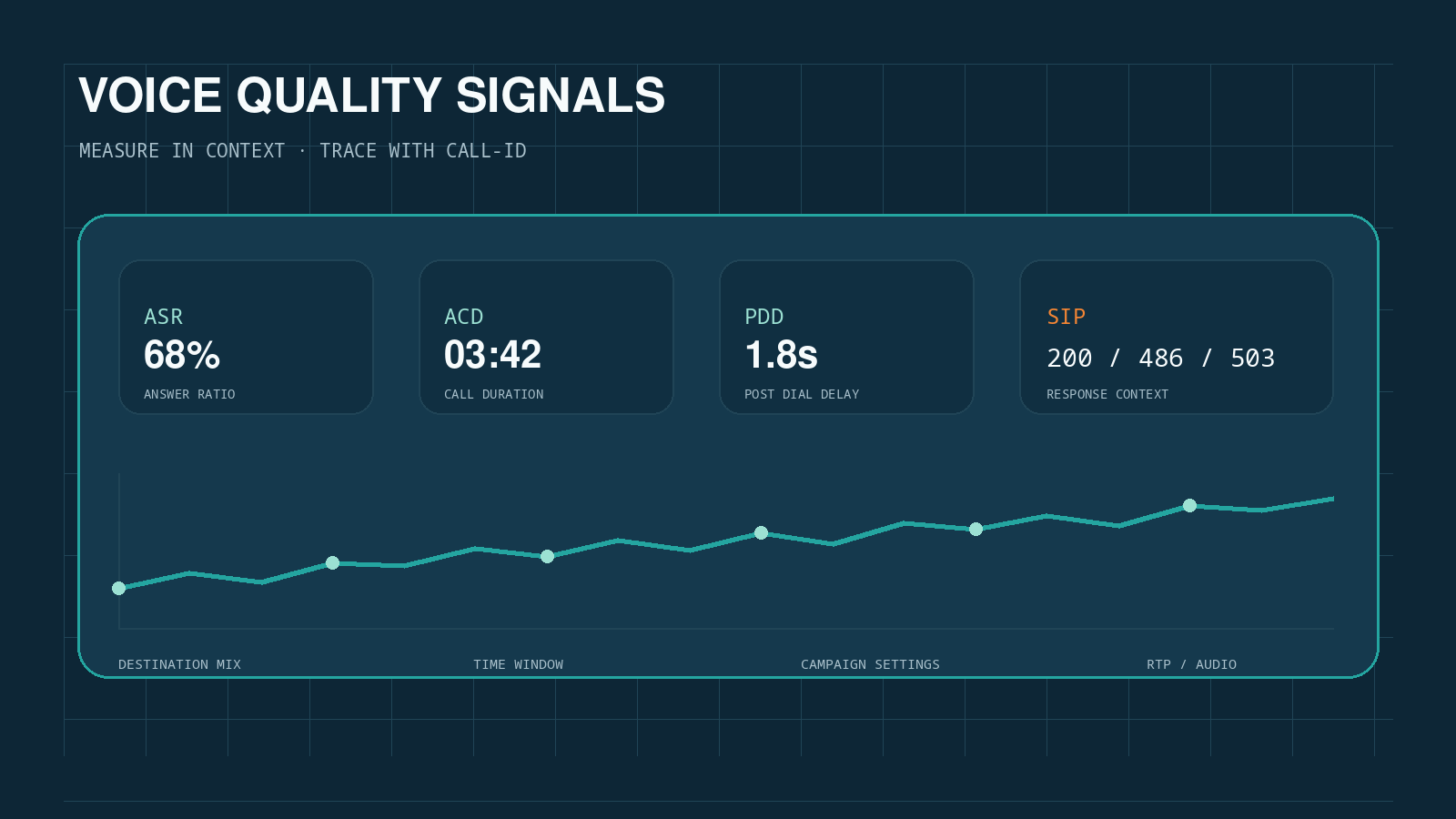
Quality for a Predictive dialler SIP trunk is not inferred from one percentage. ASR, ACD and PDD depend on destination, campaign, contactability and time of day, among other factors. The figures are considered together with SIP responses and the actual media path.
For a specific fault, we check call setup, early media, two-way audio, DTMF and hangup. This distinguishes platform, network, signalling, RTP and destination issues. The approach makes the Predictive dialler SIP trunk technically testable and keeps responsibilities clear.
INFORMATION FOR A QUOTE
So sizing is based on facts, not guesswork.
A reliable Predictive dialler SIP trunk offer starts with aggregate technical and commercial information. Please do not send passwords or personal lead lists.
FAQ
Common questions about Predictive dialler SIP trunk before technical review.
How many CPS do I need per agent?
There is no reliable generic value. Dialling mode, contactability, ring time, call duration and campaign logic determine load together.
Do ringing calls count as concurrent calls?
For technical sizing, ringing and setting-up calls can consume resources. The counting model is defined in the service profile.
Can I start at full load immediately?
A bounded pilot followed by ramp-up is the usual approach. Actual approval depends on the offer and test result.
Technical reference: Further primary source.
THE NEXT STEP
Size predictive traffic
Provide platform, seats, dial ratio, peak CPS, concurrent connections and destinations. We will turn that into a pilot plan.